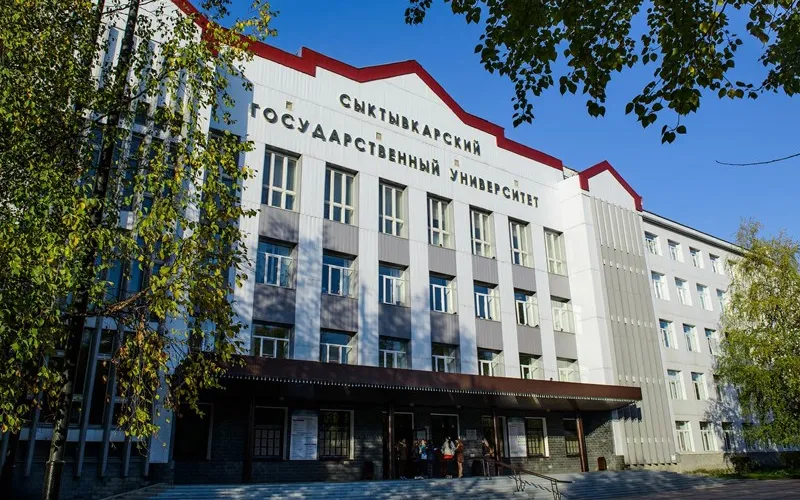
Not every Russian medical university that Indian students consider is based in a well-known city, and Syktyvkar State University is a good example of one that rarely makes the shortlist by name recognition alone, despite carrying the same core approvals as its better-known counterparts.
Where and what it is
Formally known as Pitirim Sorokin Syktyvkar State University, the institution was founded in 1972 and is located in Syktyvkar, the capital of the Komi Republic in Russia’s north-west. It is a public university offering a range of academic programmes, of which General Medicine, the MBBS-equivalent degree, draws the largest number of international applicants.
Recognition
The medical programme is listed in the WHO’s World Directory of Medical Schools (WDOMS) and is approved by India’s National Medical Commission (NMC), the two listings that determine whether a graduate can sit for India’s Foreign Medical Graduate Examination (FMGE) after completing the degree. Some sources also list additional recognition from FAIMER and ECFMG, both relevant mainly to graduates who intend to work or study outside India as well.
Course structure and eligibility
The programme runs for six years, five years of academic study and a one-year clinical internship, and is taught in English for international students, so applicants are not required to know Russian before joining, though it is introduced gradually to prepare students for clinical rotations. To apply, Indian students need a Class 12 certificate with Physics, Chemistry and Biology, a minimum of 50% aggregate marks (40% for reserved categories), and a valid NEET qualifying score. Admission does not involve a separate entrance test.
Fees
Tuition fee for MBBS in Russia is quoted by most sources at around RUB 3,20,000 to 3,50,000 a year, translating to roughly ₹2.7-3.5 lakh annually depending on the exchange rate, with the full six-year programme typically costing somewhere between ₹17 lakh and ₹20 lakh once hostel and other charges are included, among the more affordable options for a fully NMC-recognised Russian medical degree.
Student community and facilities
More than 700 international students are currently enrolled at the university across its various faculties, with a growing number of Indian students among them in recent years. Beyond General Medicine, the university also runs programmes in fields such as chemistry, biology and mathematics, giving the campus a broader academic mix than a dedicated medical institute. Hostel accommodation includes shared rooms with central heating, and Indian food is available near the campus, standard provisions at most Russian universities that host a meaningful number of Indian students.
Why it stays under the radar
Part of the reason it is less discussed than universities in Moscow, St. Petersburg or Yaroslavl is simply geography: the Komi Republic is not on the usual education-fair circuit, and its name is harder for Indian students to recall. That does not affect its recognition status, but it does mean students should expect a genuinely regional Russian city, with a cold climate and fewer big-city conveniences, rather than a well-trodden student hub.
Before applying
As with any university, students should independently verify the current NMC listing, ask for the university’s recent FMGE pass data, and request a full, itemised fee structure directly from the university’s international office before making any payment.